
After much hype here on the Warcradle blog, March saw our first ever gamebook, Valiant, finally released into the wild. In it you take on the role of the eponymous Valiant, a secret agent of the Crown Ministry of Intelligence, as you bid to prevent powerful alien technologies from falling into the wrong hands.
Unlike products like Armoured Clash or Dystopian Wars, which (with the exception of some invaluable external playtesting) are developed entirely in-house, Valiant was produced by veteran gamebook writer Jonathan Green. This left our hardworking studio team with precious little to do on the project, and they were understandably eager to get stuck in once the first copies of the new book arrived.
Would it do justice to the Dystopian Age we all know and love?
After prying the book from their hands and sitting them reluctantly in front of a computer, we asked a few of them for their thoughts…
Chris (Games Designer)
My Valiant was a specialist in fisticuffs and finesse. I tried to channel the precise moment in Mission: Impossible - Fallout, where Henry Cavill reloads his arms, and bring that energy into my adventure. It was an absolute blast, my Valiant courageously punching every darn thing in their way: Citizen-Soldiers and Heavy Construct Devastators, black-clad assassins, automata butlers, [REDACTED], [REDACTED], [EXTRA-REDACTED], and more!
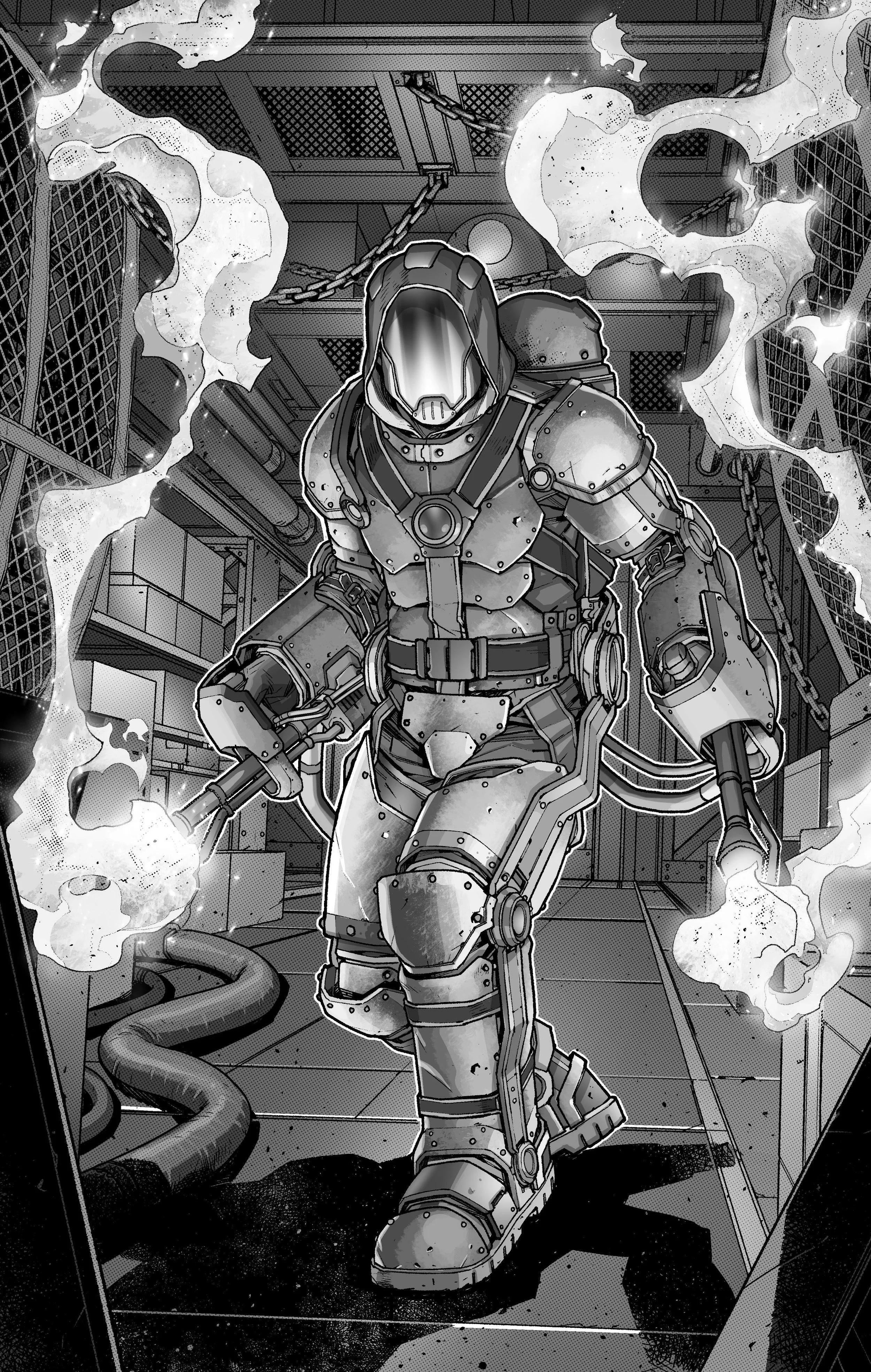
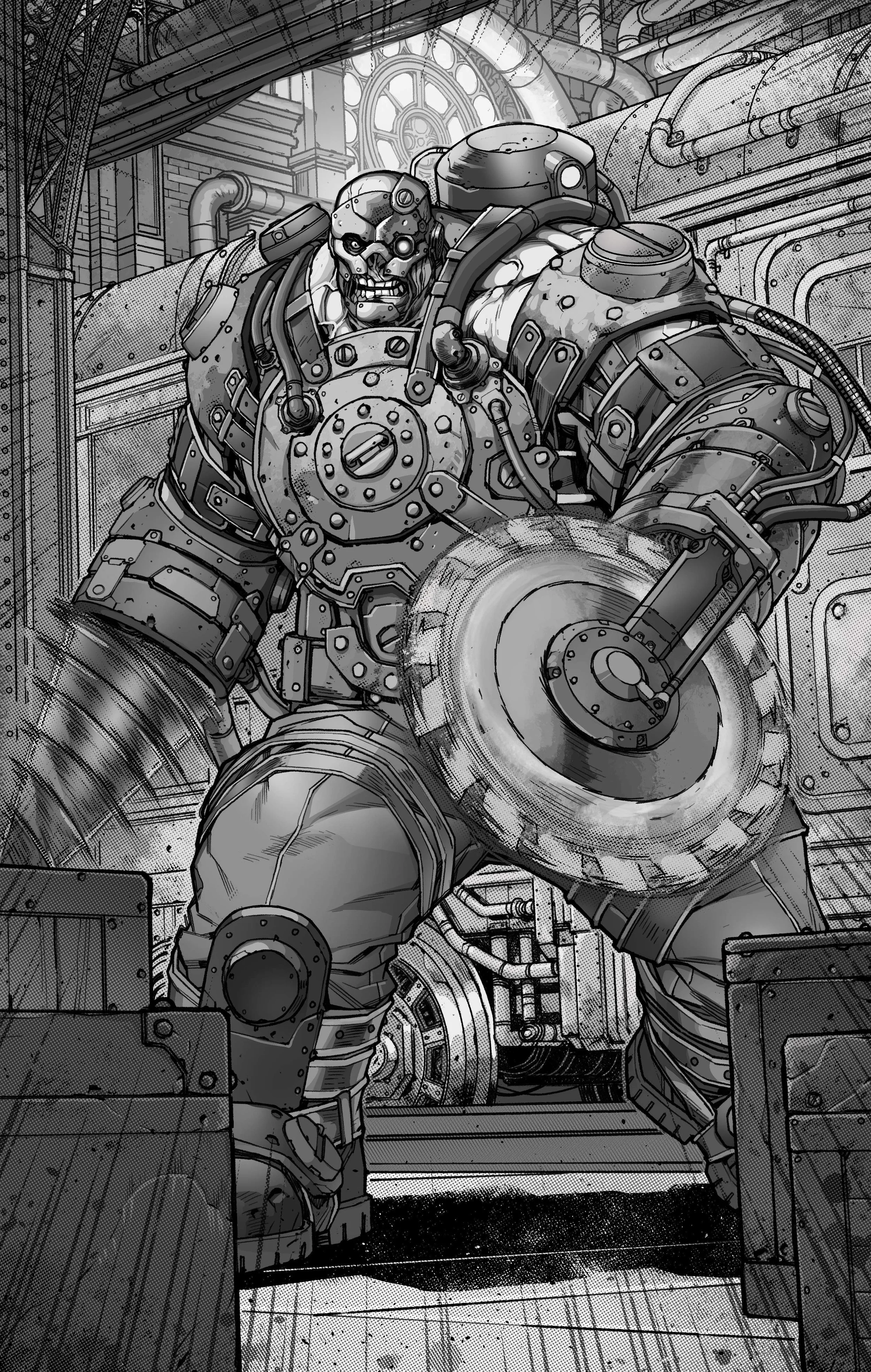
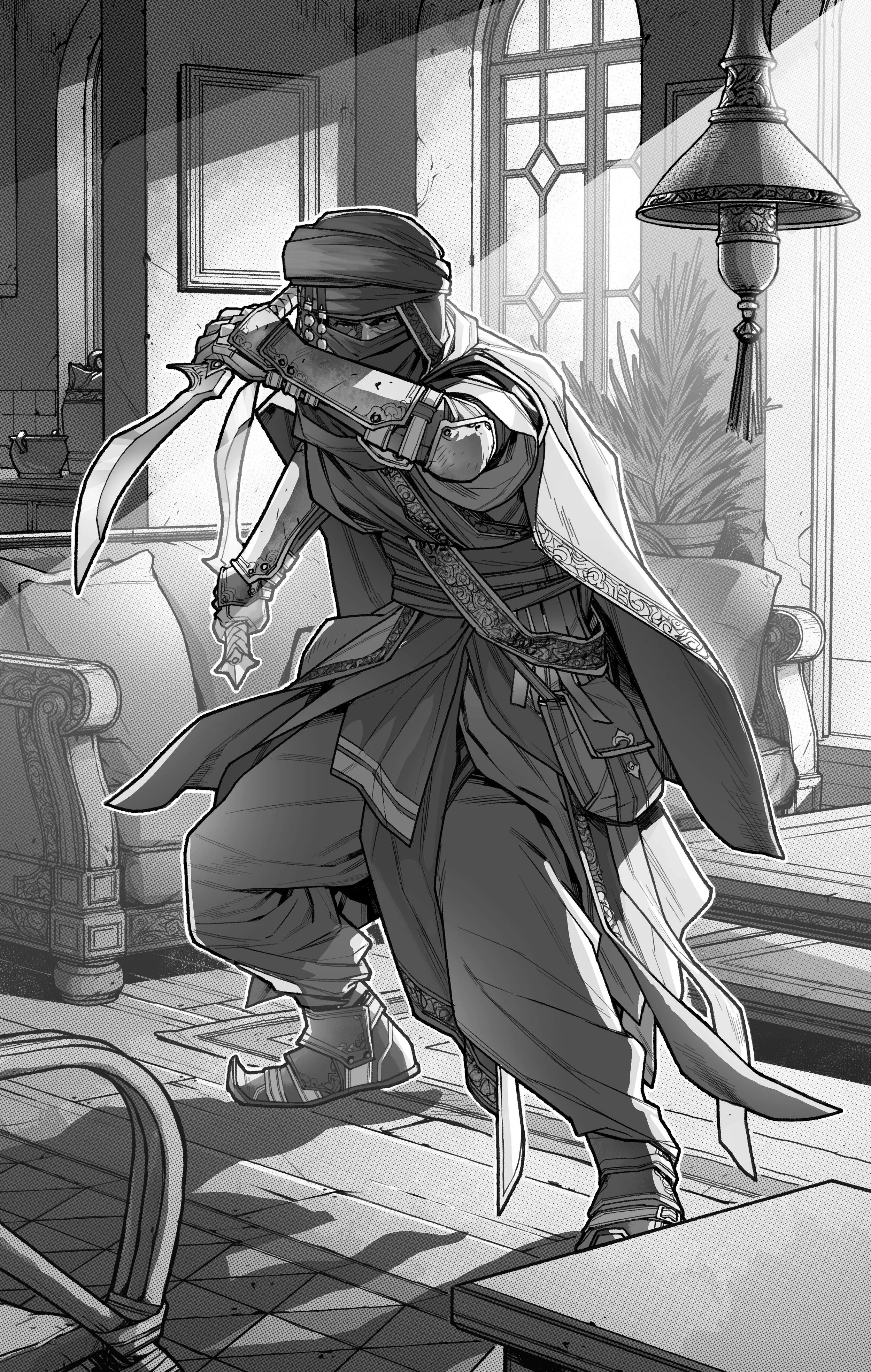
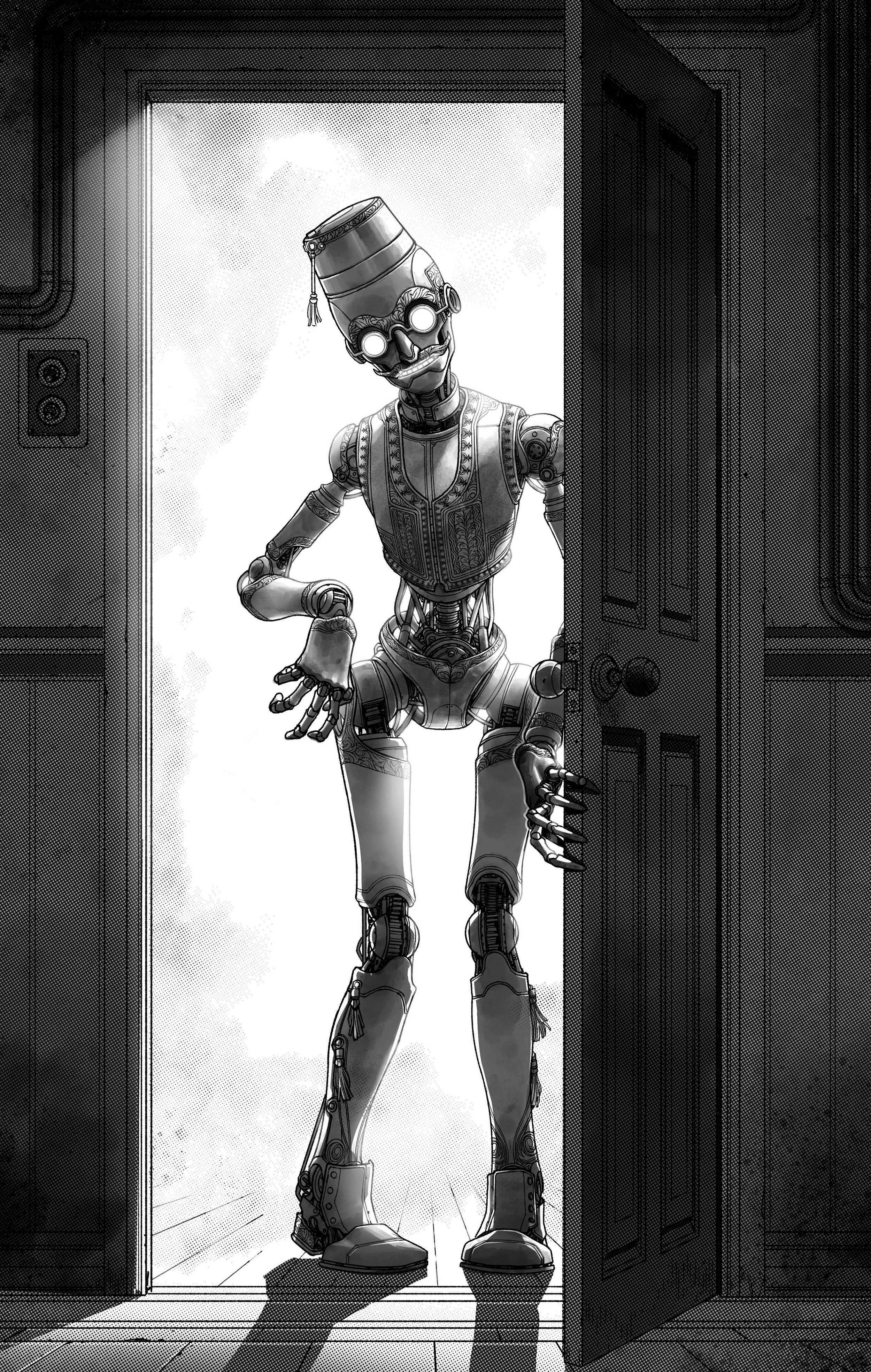
But my journey didn’t just involve punching things. I hijacked a Lakota, solved a puzzle or two, attended an auction aboard a Lyceum Aerial Dreadnought, and discovered a secret door in a manor—which I thought was really cool. Each of these segments, which took me all across the world of the Dystopian Age, were unique and exciting in their own right. Partly because I was being an awesome spy with a (presumably) awesome moustache, but also because I was getting the opportunity to experience this setting from a completely different perspective.
Commanding vast legions of infantry and tanks is great (as I’m sure we can all agree!), and there are few things that can beat a good jaunt across the high seas, but I often find that the more civilian parts of a setting can excite my imagination just as powerfully. Being able to see some of the locations of our setting—obviously inspired by the real world, but with those delightful Dystopian Age twists—was an absolute breath of fresh air. Not to mention the moments aboard the aforementioned Lyceum. It’s such a treat to get to see one of my favourite models in the range from a perspective that, sadly, I just can’t quite get on the tabletop!
I also really loved the moments when Valiant (a character aligned with the Crown) interacted with characters from the other Great Powers in a non-hostile, perhaps even friendly, manner. It’s easy to forget when you’re playing a wargame that the world isn’t just about the battles fought within it. Every time I was able to make an ally with somebody from another faction, even if it was only for a time, I was incredibly pleased. There’s so much to see in this setting, and Valiant has provided an amazing first look at a side of it that we simply haven’t had the opportunity to explore. Already, I’m desperate to get a look at the civilian side of the Empire, or the Alliance, or even to properly explore London! It’s a wide world, full of interesting characters and places, and I just can’t wait to see more.
There are other things in this book that really excited me from a world-building perspective, but I can’t talk about them for fear of giving you spoilers. I suppose what I’m saying is that you’ll just have to accept the Mission yourself. Do you have what it takes, Agent? I hope so!
Luke (CNC Machinist)
As someone behind-the-scenes of producing our miniatures, it’s rare I get the chance to take the time delving into the lore of the worlds we have weaved. So when Valiant appeared on my desk, I was thrilled!
I jumped into Valiant fresh off reruns of Burn Notice, so I specced for Mind and Finesse—a "spy in a fight is a spy that has failed at some point with no other option" sort of idea.
So from there, I jumped into the driving seat and took to it like a duck to water… if the duck was a cannonball! My Valiant was beaten, shot, and stabbed throughout his time in the Asylum, dragged through the fights thanks only to the loyalty and prowess of their fellow agent, Intrepid. Obviously, Valiant isn't meant to be a one-trick pony.
So I went back, realising that I needed more James Bond than Michael Weston, respecced for a tougher agent, and this time took more time to look around and interact with the environment around me, finding a cool new weapon (that totally didn't backfire on me and almost end my mission there) I got through the tutorial in one piece this time and reckoned I was ready to go it alone. Fingers crossed.
From my time with the game, I really liked the 2D6 system. It makes everything simple and straightforward. Having dice rolls on the pages in case you do not have dice on hand is genius! Bonuses and enemy traits are clear. Combat is simple and pretty quick, letting you push through quickly whilst still providing a challenge. Most importantly for me, there are plenty of options to choose from as you explore, so replayability is there.
All in all, I am thoroughly enjoying being a spy for the Crown and look forward to where my adventures will take me.
Robin (Lead Games Designer)
Like many of my peers, I grew up with choose-your-own-path books and loved the Fighting Fantasy series during those “formative” years (Deathtrap Dungeon and Dungeoneer being my two favourites). I was thrilled then to get a chance to play as Valiant within the Dystopian Age. Dice on standby and notebook ready (I could never bring myself to scribble inside books to keep track of stats and equipment), I set off to serve the Crown to the best of my (or rather, Valiant’s) spycrafting abilities.
Straight away, I felt like the choices I had to make when allocating skill points would be important. As it was my first playthrough, I decided to spread the points about fairly evenly. Now that I have played through the book and faced off against some tough opponents, my advice for new players would be to allocate more points to Grit and Fight than I did. Grit determines how much damage foes inflict on you as well as your total amount of Life; opportunities to restore Life are few, so good endurance is important. A stronger Fight value would have helped me put down the foes I encountered more quickly, hopefully before they give Valiant a good beating. After that, I’d suggest putting a few points into Finesse and then relying on your Fortune should an important skill check be required in another skill. Your decisions might vary, of course, and perhaps if you had chosen a more stealthy approach during your playthrough, other skills would serve you better, but for me, the combats were the most nail-biting moments.
The whole adventure drips with the atmosphere of the Dystopian Age, and the setting really comes through on every page. The diverse cast of characters you encounter and the nations they hail from will be familiar to anyone who has played Dystopian Wars or Armoured Clash. Giant landtrains, looming airships, vast Promethean Complexes - Valiant has them all!
As it was, I managed to guide Valiant through the worst the Dystopian Age could throw at them. Whilst Valiant didn’t emerge unscathed, they managed to (sort of) complete their mission. Sir Mycroft Holmes might not be awarding anyone a new medal anytime soon, but Valiant at least did their duty to the Crown and survived (albeit just) to spy another day.
I’m looking forward to playing through this again and seeing if I can do better; this time that cursed Gustave Eiffel won’t get away…
As you can see, there are any number of ways to play through Valiant, and the book genuinely rewards repeat plays in order to explore alternative pathways to success. Whether you choose to blast your way through the Dystopian Age, or smooth-talk your way around its deadliest inhabitants, the choice is yours!